

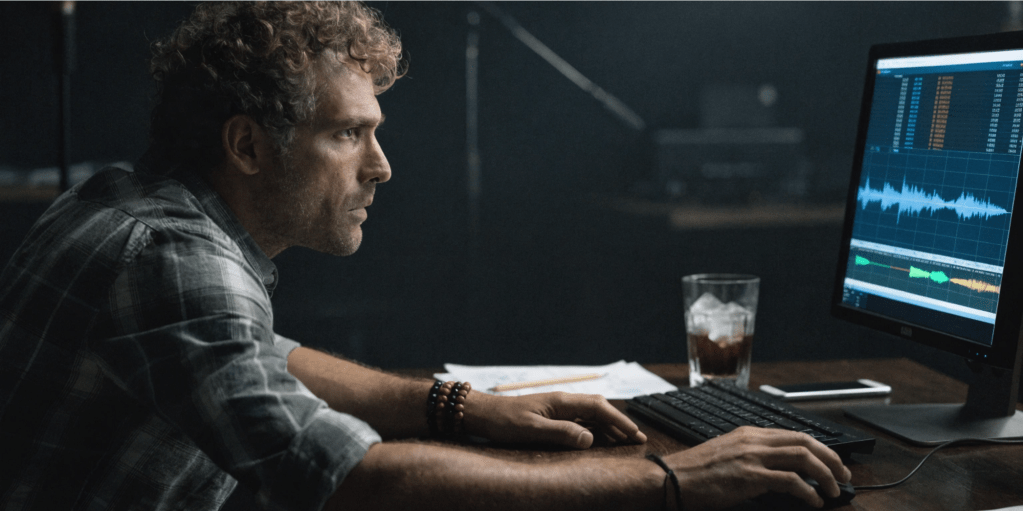
The private investigation (PI) industry in Canada has always thrived on the art of uncovering truth. From discreet surveillance to digital forensics, investigators have relied on intuition, persistence, and specialized knowledge to solve complex cases. But in recent years, a new kind of partner has entered the field—one that doesn’t sleep, forget, or miss details. Artificial Intelligence (AI) agents and machine learning systems are rapidly changing how private investigations are conducted, from open-source intelligence (OSINT) analysis to geospatial and imagery intelligence (GEOINT and IMINT).
Artificial intelligence isn’t just a tool; it’s evolving into an active collaborator in modern investigative work. Canadian private investigators are beginning to use AI agents to handle data-heavy tasks, run predictive analyses, and even help generate client reports. These systems don’t replace human judgment—they expand it. To understand this transformation, it’s helpful to look at how AI intersects with specific investigative disciplines and the unique challenges of Canada’s privacy and legal landscape.
The Data Deluge: Why AI Matters in Investigations
Even a decade ago, a typical private investigator in Canada might have spent hours manually trawling through public records, social media accounts, or business registrations. Today, that sheer volume of data is overwhelming for human analysts alone. According to Statistics Canada, the country’s digital footprint is expanding by multiples each year—driven by mobile devices, cloud platforms, and Internet of Things (IoT) sensors.
Traditional investigative methods simply can’t keep up with that explosion of available information. AI agents, however, thrive on scale. These systems can analyze terabytes of structured and unstructured data in seconds, finding patterns, flagging anomalies, and surfacing connections that might take humans days or weeks to uncover.
For private investigators, this capability translates into real-world advantages:
- Speed: Automated agents can parse enormous datasets almost instantly, accelerating case timelines.
- Precision: Machine learning algorithms can recognize relationships, keywords, and patterns that humans might overlook.
- Automation: Repetitive tasks like license plate recognition, metadata extraction, and cross-referencing identities can be fully automated.
- Predictive Insight: AI can assess the likelihood of specific behaviors or events—like potential fraud attempts or insider threats—based on historical data trends.
In short, AI isn’t just helping investigators find what they’re looking for—it’s helping them discover what they didn’t know to look for.
AI and Open-Source Intelligence (OSINT): Smarter Digital Sleuthing
Open-source intelligence—the practice of collecting data from publicly available sources—is a cornerstone of modern investigations. In Canada, OSINT often includes mining social media, public corporate filings, domain registrations, government records, and online forums. The sheer breadth of public data makes OSINT both powerful and cumbersome.
AI-driven OSINT platforms are drastically changing that balance. These systems combine natural language processing (NLP), computer vision, and automated data collection bots to transform raw, open data into actionable intelligence.
Key ways AI is improving OSINT in Canada:
- Natural Language Processing for Contextual Understanding
Traditional keyword searches can return thousands of irrelevant results. NLP-enabled AI agents, however, understand context. For instance, they can differentiate between a “John Smith” who owns a security firm in Toronto and one who’s a musician in Vancouver by analyzing associated metadata and relational clues. - Sentiment and Behavioral Analysis
AI tools can now detect tone, sentiment, and emotional cues in online communications. This helps investigators assess whether an online post reflects genuine intent, sarcasm, or an attempt at deception—critical in fraud or harassment cases. - Cross-Platform Correlation
AI agents can connect data points across disparate platforms—matching usernames, email addresses, and IP ranges—creating a holistic digital profile. This accelerates background checks, identity verification, and asset tracing. - Automated Deep and Dark Web Scanning
Certain investigations, such as corporate espionage or cyber blackmail, require exploring obscure layers of the internet. AI scrapers and pattern recognition engines can navigate these spaces safely, identifying relevant chatter, leaks, or indicators of compromise while minimizing investigator risk.
Example:
A Toronto-based PI firm investigating corporate leaks might deploy an AI OSINT agent to monitor Reddit threads, GitHub repositories, and data breach forums for mentions of a client’s proprietary technology. The system continuously tracks mentions, ranks them by relevance, and automatically generates summary reports—allowing the human investigator to focus on corroboration and actionable follow-up.
Imagery Intelligence (IMINT): Seeing With AI Eyes
Imagery intelligence, or IMINT, traditionally involves analyzing visual data—photos, video footage, or satellite imagery—to extract useful information. For decades, this field was limited by human analysts’ ability to manually review footage. Today, computer vision and generative AI models have redefined what’s possible.
In Canadian private investigations, AI-driven IMINT tools are now capable of:
- Facial Recognition: Identifying or verifying individuals across camera feeds, subject to Canada’s privacy regulations (notably PIPEDA).
- Object and Vehicle Detection: Pinpointing specific items—such as stolen property or vehicles—in vast image datasets.
- Motion Pattern Recognition: Detecting unusual activity in surveillance footage, even in low-light or crowded environments.
- Deepfake Detection: Distinguishing between authentic and manipulated media—an increasingly vital skill in litigation and digital forensics.
These technologies rely heavily on AI models trained on enormous visual datasets. In the Canadian context, firms must pay close attention to legal boundaries. The Office of the Privacy Commissioner of Canada (OPC) mandates that any biometric or video-based data use must meet strict consent and proportionality criteria. However, ethical AI frameworks now allow compliant integration of these tools.
Case example:
A Vancouver investigator working on an insurance fraud case might use AI-enhanced video analysis to review thousands of hours of surveillance camera footage from different angles. The system flags inconsistencies—like a claimant performing physical tasks thought impossible given their alleged injury—helping the investigator support findings with evidence-derived insights.
Geospatial Intelligence (GEOINT): Mapping Digital Movement
Geospatial intelligence (GEOINT) refers to the analysis of spatial data—everything that can be tied to a location. For private investigators, this means working with GPS logs, mobile metadata, satellite imagery, and geographic databases. The integration of AI into GEOINT has unlocked powerful new capabilities.
AI systems can now:
- Analyze movement patterns: Discover recurring routes, meeting points, or hidden networks between subjects.
- Predict travel behavior: Machine learning models can estimate potential destinations based on past mobility data.
- Fuse multiple data layers: Combining aerial imagery, social check-ins, and traffic data creates a real-time, multi-dimensional map of an investigation.
- Augment environmental awareness: AI can detect landscape changes, structural developments, or unusual activity zones through automated satellite analysis.
For example, in rural Alberta, where physical surveillance can be difficult due to distance or terrain, AI-enabled GEOINT systems might process commercial satellite imagery to assess whether specific assets—vehicles, equipment, or livestock—have moved, changed condition, or disappeared. When combined with OSINT sources (like vehicle listings or property records), these spatial insights can produce compelling evidence.
The Role of AI Agents: From Tools to Teammates
It’s one thing to use AI software; it’s another to employ AI agents—autonomous or semi-autonomous systems capable of making investigative decisions. These agents can handle tasks that were once entirely manual, operating within ethical and legal frameworks set by their human partners.
AI agents can:
- Automate background and due diligence checks by running continuous database and OSINT queries.
- Summarize findings into structured reports, including citations and corroboration chains.
- Collaborate across cases by remembering investigative parameters and learning from past investigations.
- Interface directly with APIs or law enforcement databases to streamline data collection (where legally allowed).
One growing trend among Canadian PI firms is the use of multi-agent systems, where several specialized AI agents—each trained for specific intelligence domains—cooperate under a human investigator’s supervision. For instance, one agent might focus on geolocation data, another on social media sentiment, and another on financial records. They exchange information to identify converging evidence points, improving accuracy.
In some advanced setups, these agents can even create interactive dashboards for clients, showing near-real-time insights from ongoing surveillance or research efforts.
Ethical and Legal Considerations in Canada
AI’s growing influence brings questions that private investigators can’t afford to ignore. Canada has a strong tradition of data privacy regulation, particularly under PIPEDA (the Personal Information Protection and Electronic Documents Act) and various provincial privacy laws (like Alberta’s and Quebec’s). Investigators must ensure that any personal data collected, stored, or analyzed by AI systems meets requirements for consent, purpose limitation, and proportionality.
Some key ethical and regulatory issues include:
- Consent and Transparency: Clients and subjects alike must understand what data is being collected and why.
- Bias and Fairness: AI models trained on biased datasets risk producing skewed or discriminatory results.
- Accountability: Human investigators remain responsible for any actions or conclusions drawn from AI-generated insights.
- Data Residency: Cloud-based AI services may store data outside Canada, raising jurisdictional concerns.
Forward-thinking PI firms are adopting AI governance protocols, establishing clear audit trails, and maintaining internal oversight bodies to ensure compliance. They’re also participating in industry-wide discussions led by organizations like the Canadian Association of Private Investigators (CAPI) to establish AI ethics standards for investigative use.
The Future: Predictive Investigations and Hybrid Intelligence
Looking ahead, the next decade may see Canadian private investigations evolve into hybrid human-AI operations. Predictive analytics, powered by deep learning, could model potential outcomes or person-of-interest behaviors based on current and historical data. While this raises complex ethical debates, the potential to prevent wrongdoing—rather than merely react to it—is immense.
Imagine an AI system that predicts fraudulent insurance claims based on subtle anomalies in claim patterns, or one that forecasts potential insider data leaks by analyzing communication networks within companies. These are the next frontiers.
At the same time, future AI developments will likely make intelligent agents more conversational and context-aware. Investigators might soon “talk” to an investigative assistant in natural language, asking questions like, “Show me all connections between this company director and offshore holdings registered in the past five years.” The AI could then retrieve, rank, and explain the results—essentially acting as a digital colleague.
Balancing Technology and the Human Element
Despite the sophistication of these tools, human intuition remains irreplaceable. AI can process information, but it can’t yet fully understand motive, emotion, or ethical nuance. Successful private investigation will always require the interpretive skills, empathy, and discretion that human investigators bring.
The most promising future is not one where investigators are replaced by machines—but where they are augmented by them. AI takes on the heavy cognitive lifting, freeing professionals to think strategically, connect emotionally with clients, and focus on judgment-based decision-making.
Consider the analogy of a seasoned detective and a tech-savvy partner. One sees patterns in human behavior; the other sees patterns in data. Together, they form a powerful investigative partnership.
Conclusion: The AI-Enhanced Investigator
Artificial intelligence is redefining the private investigation landscape in Canada at a remarkable pace. From OSINT systems that sift through global data sources to GEOINT and IMINT models that reveal hidden patterns in imagery and location data, AI is extending the reach and efficiency of human investigators.
But technology alone doesn’t solve cases—people do. The future of private investigation will depend not only on how effectively firms deploy AI agents, but also on how responsibly they manage data, ethics, and transparency. Those who can balance innovation with integrity will lead the profession into a new era—one where human insight and machine intelligence merge to uncover truth with unprecedented precision.
AI may not replace investigators, but it’s becoming their most valuable—and perhaps most discreet—partner.
 bestprivateinvestigatorsincanada.ca
Leave a comment